Born on the Racetrack
30 Cars for America
When the latest road-going KTM X-BOW was introduced in Europe, all 70 production positions were immediately spoken for.
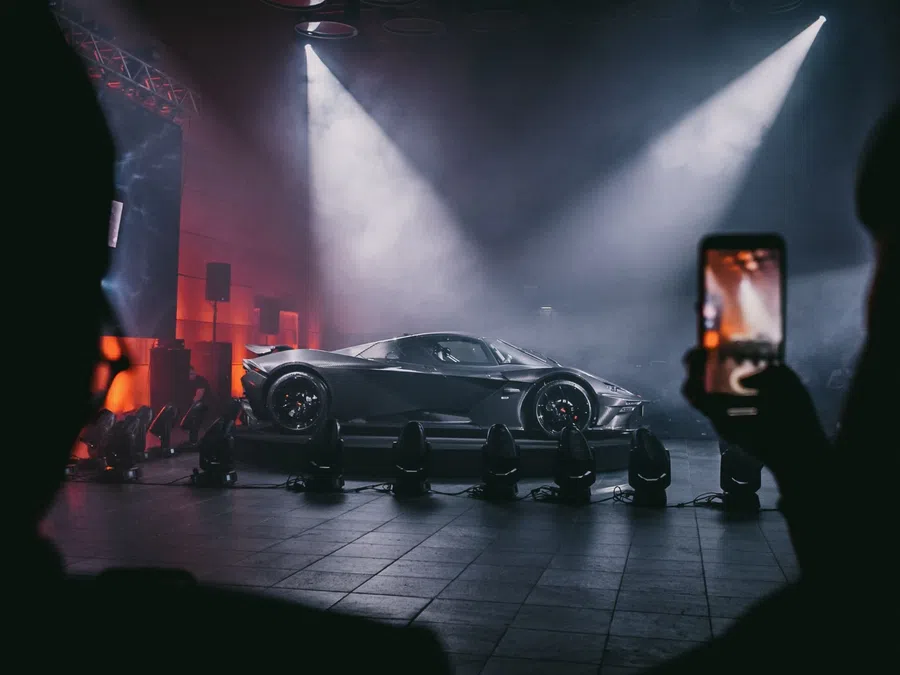
Now, for the first time, the next evolution of the X-BOW is being developed for the United States.
The GT-XA will not be mass produced. Each car is built individually in Austria, shaped by the same people, engineering culture and racing experience behind the KTM X-BOW program.
With demand extending well beyond Europe—and with production limited by the nature of building these cars by hand—just 30 GT-XA production allocations will be created for the U.S. market.
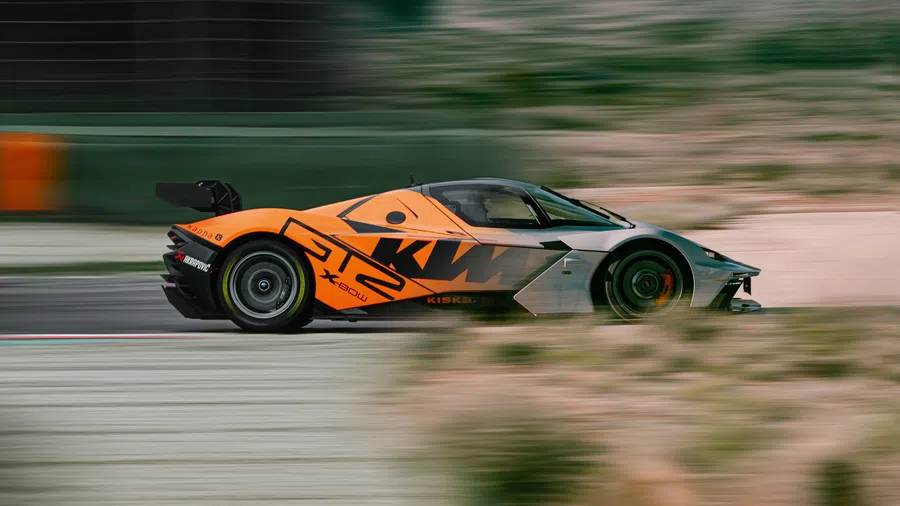
Born from racing.
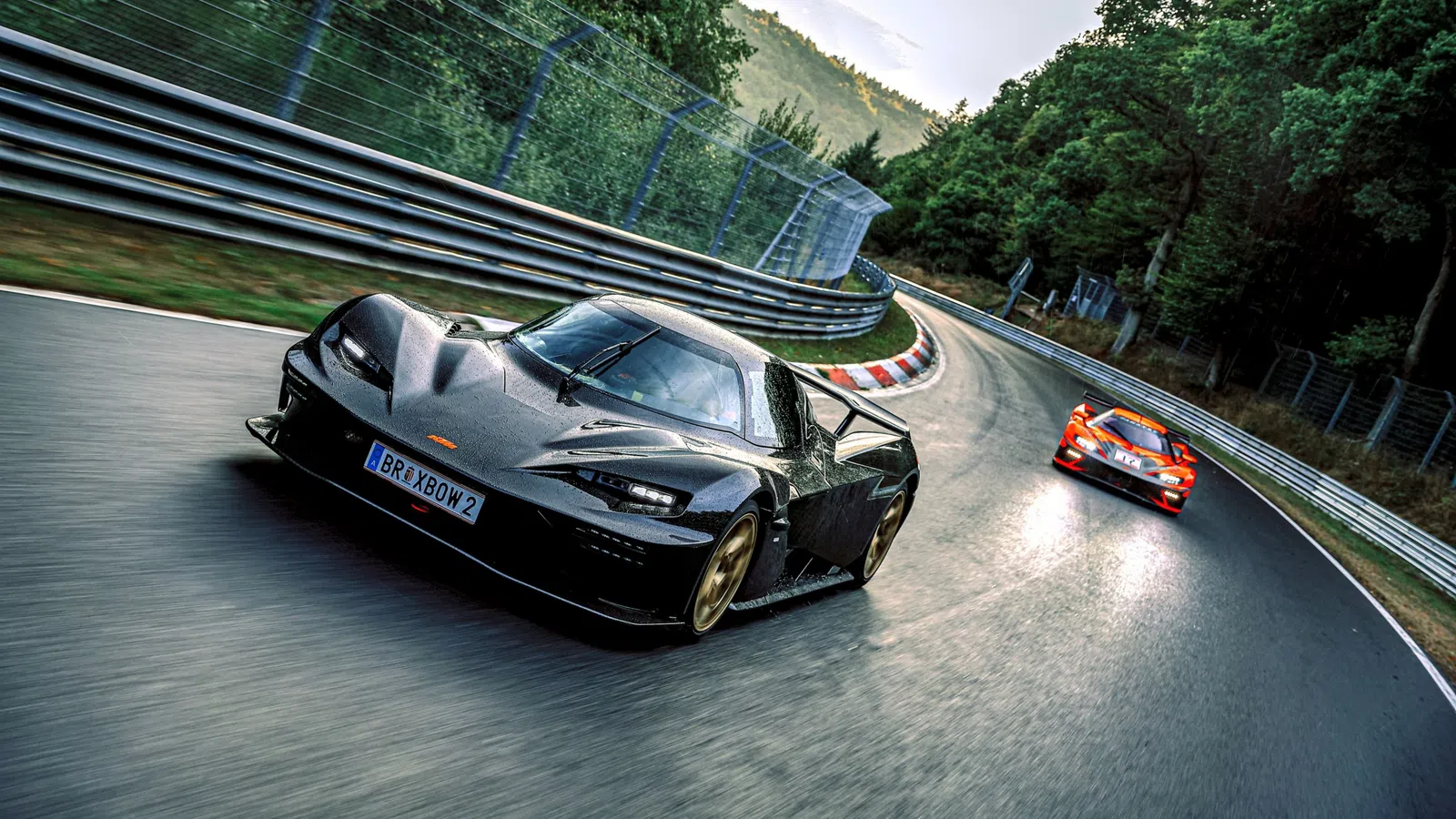
The KTM X-BOW began with a radical idea: build a road car from the principles of a racing machine. Introduced in 2008, the original X-BOW placed the driver inside a carbon-fiber monocoque whose basic concept was rooted in Formula 3 engineering. Low mass, structural rigidity, aerodynamics and connection came first. It was not a conventional sports car made more extreme. KTM X-BOW approached the problem from the other direction: begin with racing principles and determine what was necessary for the road.
Competition became the development laboratory. The X-BOW evolved into the GT4, bringing the carbon monocoque beneath an enclosed canopy and into serious international GT competition. Racing exposed every component to the only test that ultimately matters: use. Years of development, victories and championships followed, continuously refining the architecture.
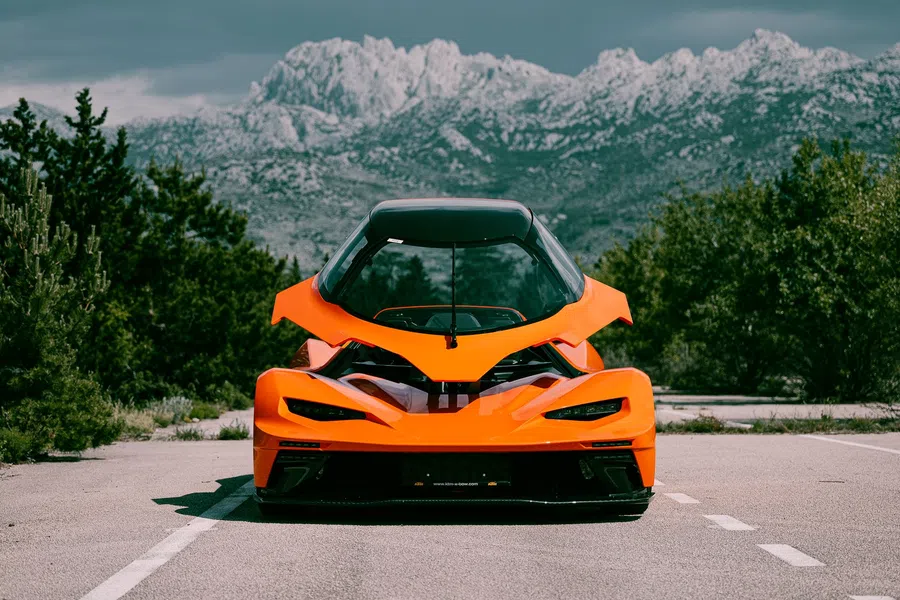
Racing Knowledge, Reimagined for the Road
That knowledge ultimately produced the GTX and GT2, a new generation of full-carbon KTM X-BOW race cars. The GT2 went on to win races and championships in European competition against some of the most established names in the sport. Then the development process was reversed. Rather than turning a road car into a racing car, the proven GT2 architecture became the technical foundation for the GT-XR road car.
Now comes the next evolution. The GT-XA is being developed specifically for the United States, with the objective of preserving the character, architecture and sensations of the racing platform while meeting the requirements of genuine road use. Nearly two decades after the first open-cockpit X-BOW appeared, the philosophy remains remarkably unchanged: racing created the knowledge. The road creates a new way to experience it.
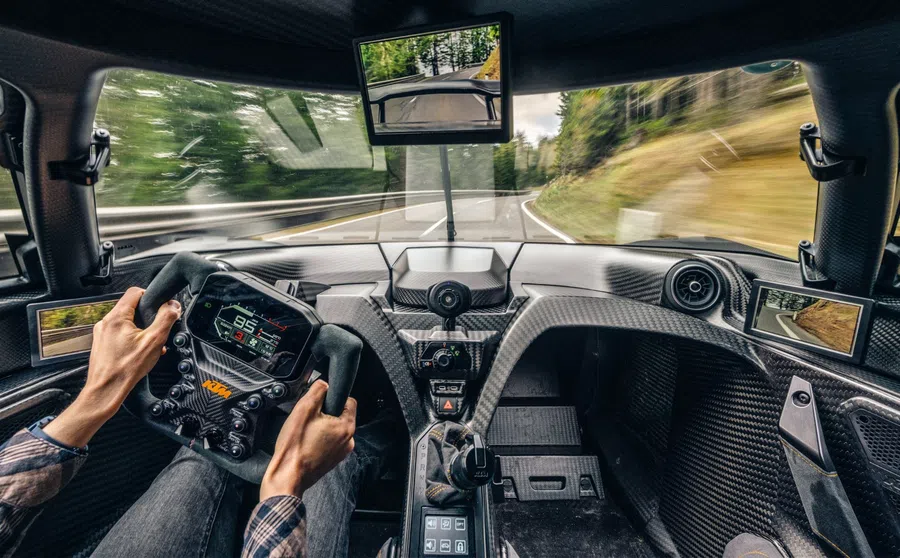
Not simply a car.
An experience you enter.
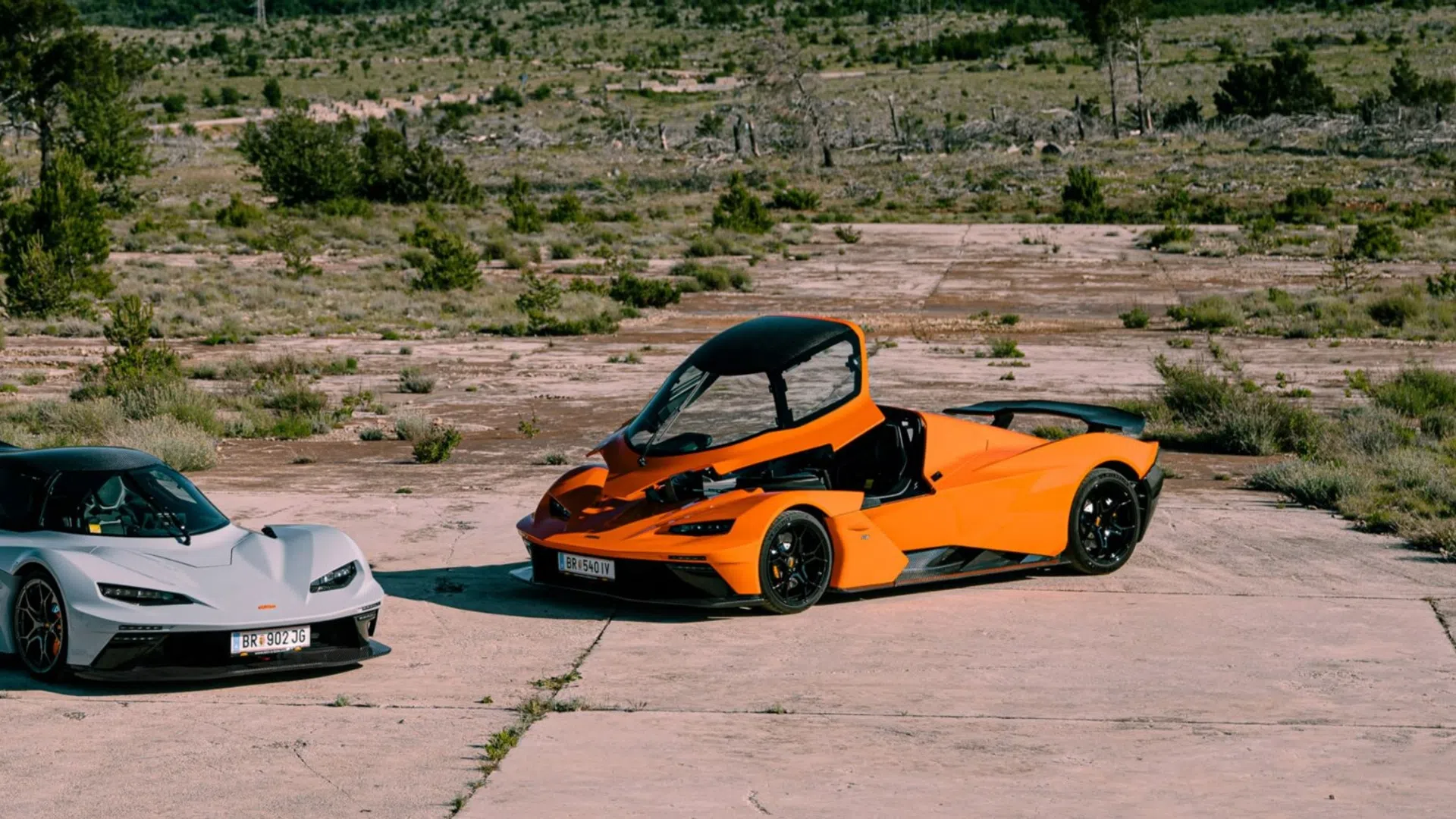
The KTM X-BOW GT-XA begins around you. You lower yourself into the carbon-fiber monocoque. The one-piece canopy closes overhead. The outside world disappears. Sound, vibration and mechanical energy travel through the structure. Your hands meet a racing steering wheel, your feet settle onto the pedals and your eyes look through a deeply curved windshield from a seating position that feels far closer to an endurance prototype than a conventional road car.
Nothing inside the GT-XA exists simply for decoration. The extraordinary seating position, canopy, controls, visibility, aerodynamics and structure are the consequence of function. The experience is physical and immediate. You don't simply hear the machine working—you feel it through the monocoque surrounding you.
THE PEOPLE BEHIND THE MACHINE.
Behind every KTM X-BOW is a small group of engineers, technicians and drivers who design it, build it, race it and continue developing it.
Years of competition have taught them to care about details most people will never notice—but the right driver will feel immediately.
These are not anonymous hands on a production line. They are the people responsible for the machine, from its engineering and assembly to its development on the circuit.
Ownership begins before delivery.
The experience begins with specification, as your individual car enters production in Austria.
Owners can visit the factory, see their car taking shape and meet the people responsible for building it. It is an opportunity to understand not only what is being made, but why it was made that way.
That relationship continues beyond delivery. Owner experiences at the Red Bull Ring bring together the cars, the people who created them and the people who drive them—on the circuit where the engineering can be fully understood.
Over time, those experiences create something larger: a small international community connected by the same fascination with engineering, racing and driving.
The car becomes yours. The experience continues.
Born on the racetrack
GT race car-performance for the street.